Wheezing
A whistling sound from the chest, particularly at night, during infections or after exposure to triggers.
Specialist assessment for asthma, wheezing, recurring cough, chest tightness and smog-related breathing problems—with access to advanced lung-function and allergy testing when clinically indicated.
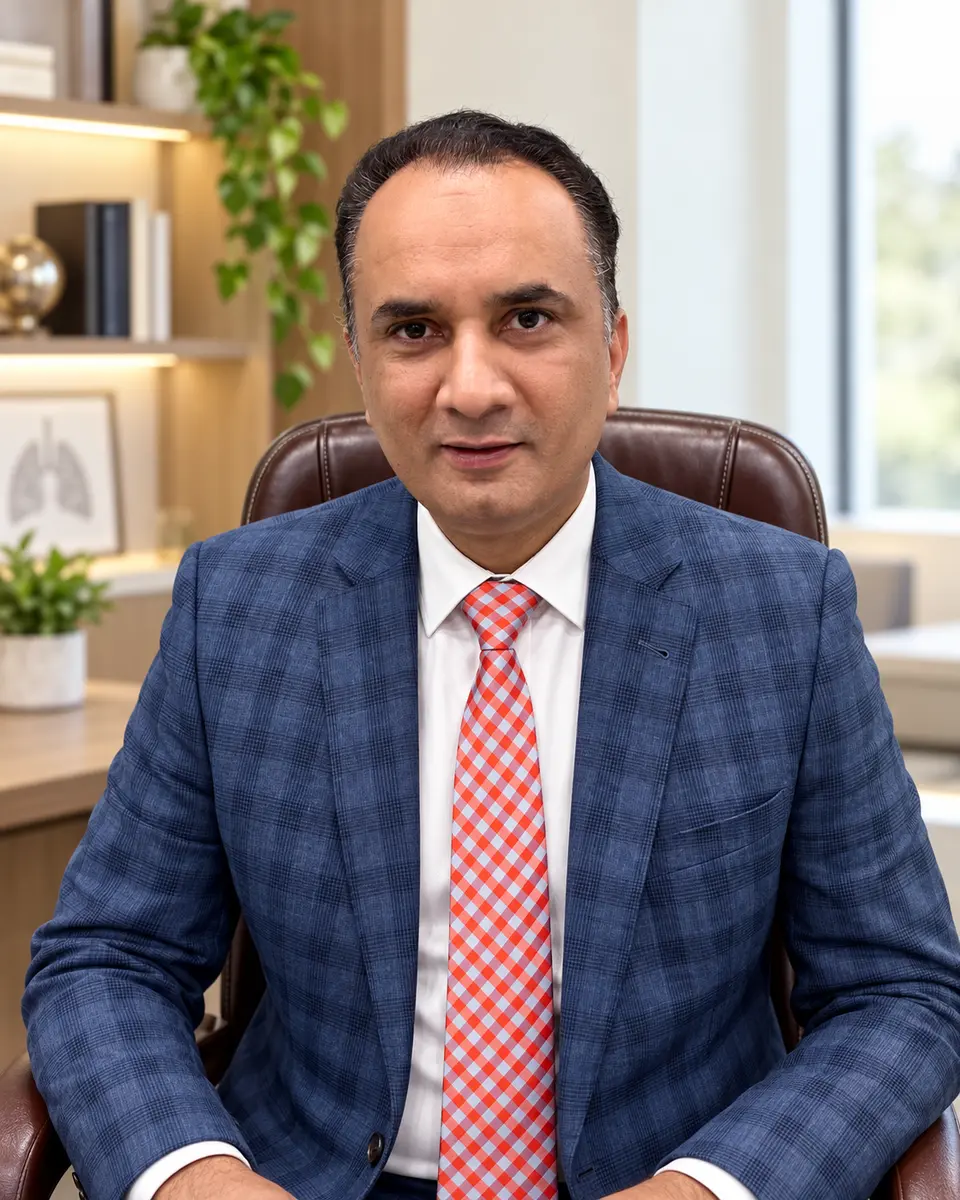
Dr G. Sarwar Chaudhry MBBS, FRACP (Australia), FCCP (USA) · Consultant Pulmonologist, Sleep Physician & Allergy Specialist
Asthma is a long-term airway condition in which symptoms and airflow limitation can vary over time. Some patients experience obvious wheezing, while others mainly develop night-time cough, chest tightness, shortness of breath or symptoms during exercise.
Dust, pollen, house-dust mites, respiratory infections, smoke, perfume, weather changes and Lahore’s air pollution may trigger or worsen symptoms. A careful assessment is important because asthma can overlap with nasal allergy, reflux, obesity, smoking-related lung disease and other causes of breathlessness.
Consider specialist review when breathing symptoms recur, disturb sleep, restrict activity or repeatedly return during smog, infections or allergen exposure.
A whistling sound from the chest, particularly at night, during infections or after exposure to triggers.
Cough that is worse at night, early morning, with exercise, cold air, laughter, dust, perfume or pollution.
Episodes of tightness or difficulty taking a comfortable breath, especially when symptoms vary from day to day.
Breathlessness that is intermittent, triggered by exertion or repeatedly improves and then returns.
Repeated urgent visits, steroid courses, nebulisation or worsening whenever there is a respiratory infection.
Regular reliever use, disturbed sleep, limited exercise or ongoing symptoms despite prescribed inhalers.
There is no single test that answers every asthma question. The investigations selected depend on the symptom pattern, previous treatment, examination and the possibility of alternative diagnoses.
Symptoms, variability, night waking, exercise limitation, triggers, nasal allergy, smoking or vaping, medicines and previous flare-ups are reviewed.
Spirometry with bronchodilator testing may demonstrate variable airflow obstruction. A normal result on one occasion does not always exclude asthma.
FeNO, eosinophil assessment or skin-prick allergy testing may be useful in selected patients.
When the diagnosis remains uncertain or symptoms are disproportionate, assessment may include complete pulmonary function tests, bronchial challenge testing, chest imaging or investigation for another respiratory or medical condition. Not every patient needs every test.
Effective asthma management starts with confirming the likely diagnosis and understanding why symptoms remain active. Treatment is then adjusted to the individual’s symptom burden, flare-up risk, inflammatory pattern, associated allergy and response over time.
Arrange a ConsultationLahore’s dust, traffic emissions and seasonal smog can irritate the airways and worsen existing asthma. Pollution may be the trigger, but recurring cough or breathlessness should not automatically be labelled as “just smog.”
Allergic rhinitis and sensitisation to environmental allergens can also contribute to poor asthma control. When the history suggests an allergic component, evaluation can be coordinated through our Allergy Centre Lahore.
MBBS, FRACP (Australia), FCCP (USA)
Consultant Pulmonologist, Sleep Physician & Allergy Specialist
Dr Chaudhry completed specialist training in Australia and assesses patients with asthma, difficult-to-control airway disease, allergy-related respiratory symptoms and other causes of cough or breathlessness. His combined respiratory and allergy experience allows overlapping conditions to be assessed within one structured plan.
View Dr Sarwar’s ProfileA pulmonologist, also called a respiratory or chest physician, is trained to diagnose and manage asthma and other causes of wheezing, cough and breathlessness. Dr G. Sarwar Chaudhry is an Australian-trained consultant pulmonologist practising at Australian Polyclinic in DHA Phase 5, Lahore.
Diagnosis is based on the pattern of symptoms, clinical assessment and evidence of variable airflow limitation where possible. Spirometry with bronchodilator testing is commonly used. FeNO, peak-flow monitoring, bronchial challenge or allergy testing may be considered in selected patients.
Yes. Asthma is variable, so spirometry may be normal when symptoms are absent or well controlled. The next step depends on the history and may include repeat testing during symptoms, bronchodilator testing, peak-flow monitoring, FeNO or bronchial challenge testing.
Air pollution and fine particles can irritate the airways and worsen cough, wheezing and breathlessness in people with asthma. Persistent or recurrent symptoms should still be assessed because smog may aggravate asthma or another underlying respiratory condition.
Yes. Depending on clinical need, available testing includes spirometry with bronchodilator assessment, FeNO, complete pulmonary function tests and bronchial challenge testing. The appropriate investigation is selected after clinical review.
Skin-prick testing for relevant environmental and selected food allergens is available. Testing is interpreted alongside the clinical history because a positive test indicates sensitisation but does not by itself prove that an allergen is causing asthma symptoms.
Many patients can achieve good symptom control and maintain normal activity with an accurate diagnosis, appropriate anti-inflammatory treatment, correct inhaler technique, trigger management and follow-up. Difficult-to-treat asthma requires a structured review before it is labelled severe.
Severe or rapidly worsening breathlessness, difficulty speaking, blue or grey lips, confusion, collapse, marked chest pain or failure to respond to the prescribed reliever plan requires urgent emergency care. Do not wait for a routine clinic appointment.
Australian Polyclinic is at First Floor, Building 19, CCA, DHA Phase 5, Lahore. Clinic hours are Monday to Saturday, 2:00pm–9:00pm. Call or WhatsApp 0311 057 3333 to arrange an appointment.
Medical information on this page is general and does not replace individual consultation, examination, diagnosis or treatment. Do not start, stop or change prescribed medicines solely on the basis of this page.
Arrange a consultation with Dr G. Sarwar Chaudhry at Australian Polyclinic, DHA Phase 5.