
Australian Polyclinic · Patient guide
Atopic Eczema: Symptoms, Skin Care, Flare Treatment and Allergy Testing
Eczema can make skin dry, itchy and inflamed, with flares that disturb sleep and daily life. A consistent skin-care routine and the right treatment can help. Repeatedly changing creams or searching for one hidden allergy is often less useful than a clear management plan.
Last reviewed: 11 November 2026.
What is atopic eczema?
Atopic eczema, or atopic dermatitis, is a recurring inflammatory skin condition. Changes in the skin barrier, immune responses and inherited factors all contribute. Skin loses moisture more easily and may react to irritants that other people tolerate.[1]
It often begins in childhood but can persist or appear in adults. A personal or family history of eczema, asthma or allergic rhinitis may occur. Eczema is not caused by poor hygiene and cannot be caught from someone else.[1][2]
What does eczema look and feel like?
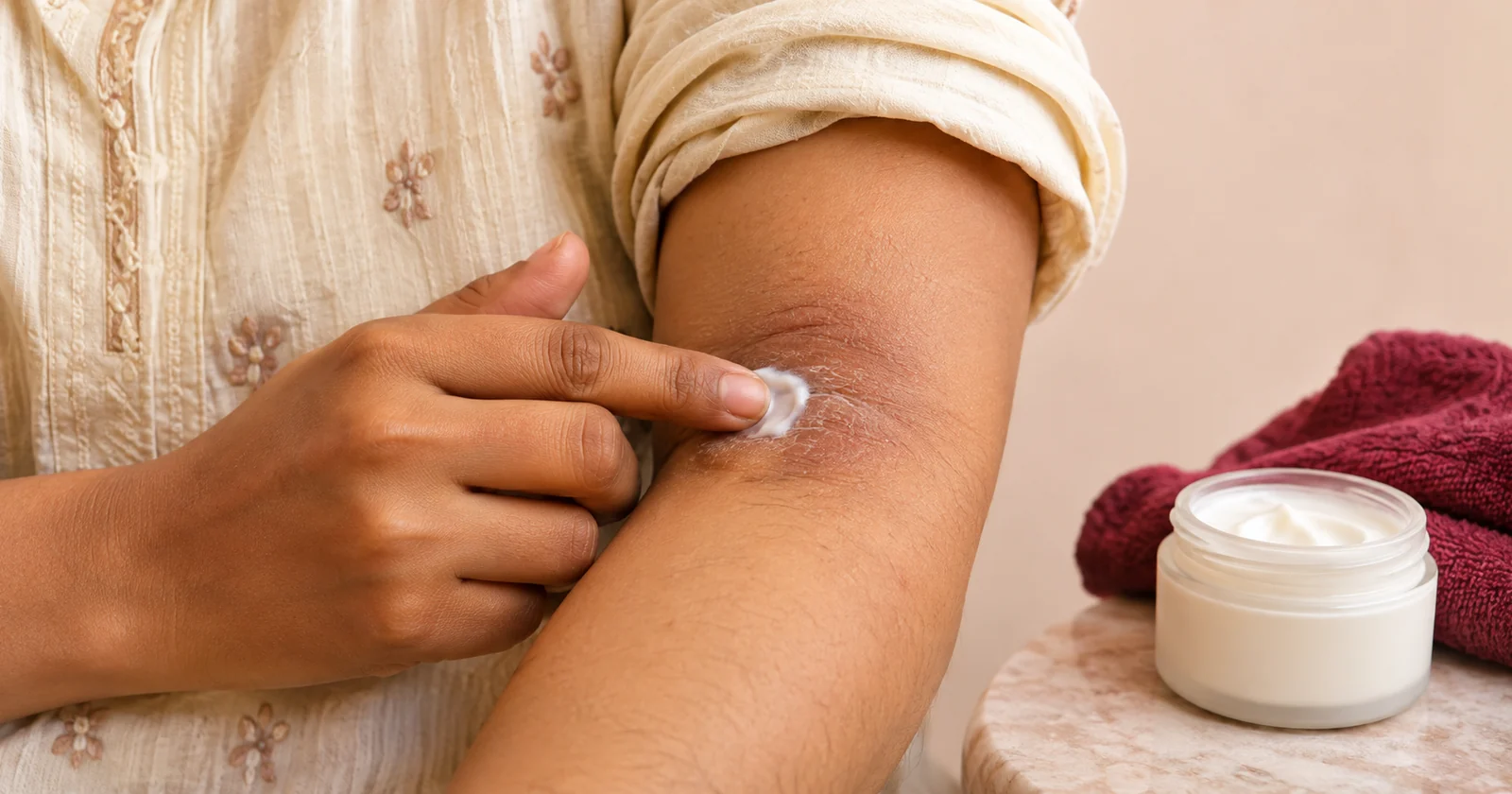
Itching is a major feature. Skin may be dry, rough, cracked, thickened or scaly. On brown skin, inflammation may look darker, gray, purple or less visibly red. Temporary lighter or darker areas can remain after a flare.[2]
The hands, elbow creases and backs of the knees are common sites; babies may have facial involvement. Not every itchy rash is eczema. Fungal infection, contact dermatitis and other conditions can resemble it, so a new or unusual rash should be examined.
Hives usually form raised, transient wheals. Eczema more often persists as dry inflamed patches. The distinction affects treatment.
A manageable everyday skin-care routine
Choose a simple routine you can maintain:
- Moisturize regularly: use a fragrance-free cream or ointment, including when the skin is relatively settled. Reapply after washing and whenever skin feels dry.
- Wash gently: use lukewarm water and a mild fragrance-free cleanser when needed. Avoid prolonged hot bathing and harsh scrubbing.
- Pat dry: apply moisturizer soon afterward rather than rubbing the skin.
- Reduce irritation: favor soft clothing and avoid fragranced products that sting or provoke a flare.
- Limit scratching: keep nails short; a cool compress may ease an itchy area.
No single moisturizer suits everyone. If a product repeatedly irritates your skin, bring its ingredient list to the consultation.[3][4]
Treating a flare safely
Moisturizer alone may not control active inflammation. Topical corticosteroids are established treatments when the strength, body site, amount and duration are chosen appropriately. Thin skin, the face, skin folds and young children require particular care.[5]
Ask for clear instructions: which product goes where, how much to apply, how often and when to review. Steroid-sparing medicines such as topical calcineurin inhibitors can be useful for selected patients. Maintenance treatment may reduce recurrent flares.[5]
Do not use an unidentified combination cream or a strong steroid borrowed from someone else. If the diagnosis is uncertain, examination is more helpful than repeatedly trying antifungal, antibiotic and steroid mixtures.
Wet wraps and other intensive treatments should be taught by a clinician, especially in children. Severe or persistent disease may need dermatologist-directed treatment, including phototherapy or systemic medicines. Availability and suitability vary.[4][6]
Do antihistamines, antibiotics or steroid tablets help?
Antihistamines do not treat the underlying skin inflammation. A clinician may occasionally use a sedating medicine briefly for severely disturbed sleep, but it is not a substitute for controlling the eczema.[8]
Antibiotics are reserved for situations where infection is suspected and treatment is indicated. They are not part of every flare. Routine or repeated oral steroid courses are generally discouraged for atopic eczema because of adverse effects and rebound problems; difficult disease deserves a longer-term plan.[5][6]
When is allergy testing useful?
Not everyone with eczema needs an allergy panel. Testing may be considered when the history suggests a specific immediate food allergy, when a child's eczema remains difficult despite appropriate care, or when another allergic condition needs assessment.[7]
A positive skin-prick or blood test can show sensitization without proving that the allergen causes the eczema. Results must be interpreted alongside the history. Broad testing can lead to unnecessary restrictions.
Patch testing answers a different question: whether a substance touching the skin causes allergic contact dermatitis. This may be considered for persistent hand, facial or product-related dermatitis through an appropriate service.
Do not remove major foods from a child's diet without professional advice. Restrictive diets can affect nutrition and growth. Allergy injections are not routine eczema treatment; selected allergy-related decisions require individualized specialist assessment.[7]
Recognizing triggers without making life smaller
Heat, sweating, rough fabrics, soaps, detergents and stress can aggravate symptoms in some people. Dry weather or frequent handwashing may also make the skin barrier harder to maintain. Triggers differ between individuals.[1][3]
Keep a short record of products and exposures around a flare, then change one likely irritant at a time. Avoid expensive “detox” plans or promises of a permanent cure. Discuss the effects on sleep, confidence and school or work as well as the appearance of the skin.
If you also have sneezing or wheezing, mention this so those symptoms receive their own assessment.
When to seek a review or specialist referral
Arrange review if the diagnosis is uncertain, prescribed treatment is not working, flares keep returning, sleep is repeatedly disturbed or large areas are affected. Bring all creams and photographs showing how the rash changes.[6]
Rapidly spreading painful eczema, grouped blisters or punched-out sores, fever and eye-area involvement require urgent assessment. Eczema herpeticum is a serious viral infection that should not be treated as an ordinary flare.[8]
Eczema assessment with Dr Sadaf Sarwar
Dr Sadaf Sarwar, Consultant Family Physician, can assess common skin complaints, review your skin-care routine and arrange appropriate treatment or dermatology referral. Bring the names of previous creams, how long you used them and any suspected immediate allergic reactions.
Our family medicine service in Lahore provides a starting point for assessment. Patch testing and advanced eczema treatments require confirmation or referral through suitable specialist services.
For itching and flaking that mainly affect the scalp, read our guide to dandruff and seborrheic dermatitis.
Frequently asked questions
Is eczema contagious?
No. Atopic eczema cannot be passed from one person to another. A separate infection can sometimes develop in affected skin.
Should I moisturize when the rash has settled?
Yes. Regular moisturizing supports the skin barrier and remains useful between flares.
Are steroid creams always harmful?
No. The right topical steroid used as instructed is an established eczema treatment. Strength, body site and duration need to be appropriate.
Does everyone with eczema need a food allergy test?
No. Testing should follow the clinical history. A positive result does not automatically prove a food is causing eczema.
Should I stop milk or wheat for my child?
Do not remove major foods without professional advice. Discuss any reproducible reaction and nutritional concerns with the clinician.
Can eczema be permanently cured?
There is no guaranteed permanent cure. Many people achieve good control, and some children improve substantially as they grow.
DHA Phase 5 · Lahore
Plan a family-physician consultation
Consult Dr Sadaf Sarwar at Australian Polyclinic. Bring previous reports and a list of your medicines.
First Floor, Building 19, CCA, DHA Phase 5, Lahore.
Clinic hours: Monday–Saturday, 2:00–9:00 PM. Confirm doctor availability when booking.
Routine appointment messages are not an emergency service.
Related patient guides
References and further reading
- AAD — Causes of atopic dermatitis
- NHS — Atopic eczema
- AAD — Atopic dermatitis skin care
- AAD — Relieving itchy eczema
- AAD — Atopic dermatitis clinical guidelines
- AAD — Diagnosis and treatment
- AAD — When children with eczema need allergy testing
- NICE CG57 — Eczema and eczema herpeticum in children
Sources accessed 11 November 2026. Treatment availability and local pathways may differ.