
Australian Polyclinic · Lung health guide
Lung Cancer: Symptoms, Diagnosis, Staging and Treatment
A clear explanation of warning symptoms, the tests used to establish a diagnosis and how modern treatment is chosen for each person.
Medically reviewed and approved by Dr G Sarwar Chaudhry, MBBS, FRACP (Australia), FCCP (USA), Consultant Pulmonologist and Sleep Physician, on 9 October 2026.
What is lung cancer?
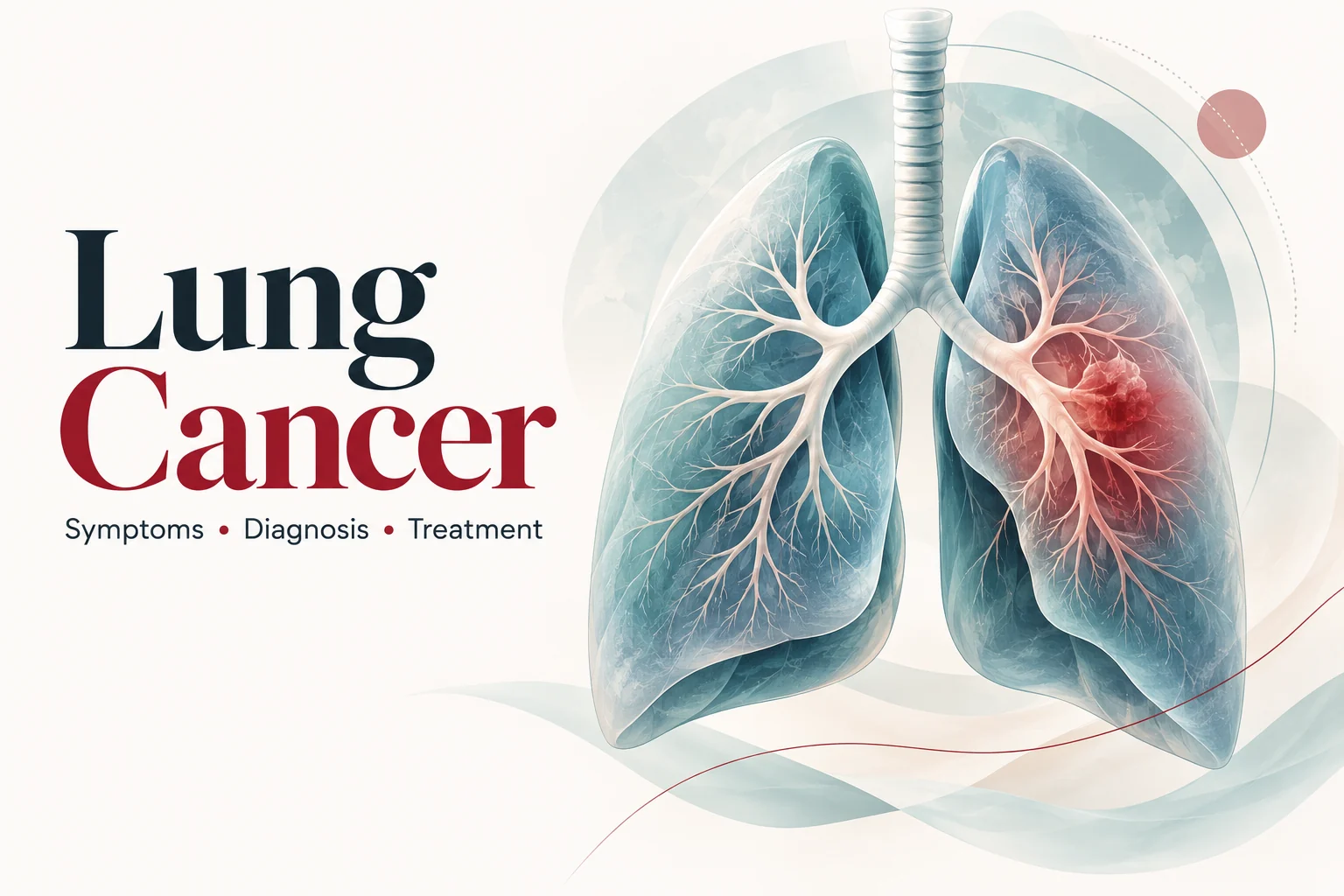
Lung cancer develops when abnormal cells in the lung grow without normal control. It can occur in people who smoke, former smokers and people who have never smoked. Finding a lung abnormality on a scan does not, by itself, establish that it is cancer.
Non-small cell lung cancer
The more common group, including adenocarcinoma and squamous cell carcinoma. Treatment depends on the exact type, extent of disease and tumour characteristics.
Small cell lung cancer
A different form that usually grows and spreads more quickly. Its treatment pathway differs from that for non-small cell lung cancer.
Cancer that has spread to the lungs from another organ is usually treated according to its original site, rather than as a new primary lung cancer.
1, 2, 3Who is at increased risk?
Tobacco smoking is the main preventable risk factor. Risk is influenced by the amount smoked and the duration of smoking. Other relevant exposures include second-hand smoke, radon, asbestos and certain workplace carcinogens. Outdoor air pollution also contributes to risk.
Age, family history and previous lung disease may influence an individual assessment. No smoking history should be used as a reason to dismiss concerning symptoms. Reducing exposure and stopping smoking remain useful even after many years.
1Lung cancer symptoms: when to seek assessment
Early lung cancer may produce no symptoms. When symptoms occur, they can resemble infection or another respiratory condition. Arrange timely review for:
- A persistent cough, or a noticeable change in your usual cough.
- Blood in sputum or coughing of blood.
- Unexplained breathlessness, chest discomfort or ongoing hoarseness.
- Unexplained weight loss, reduced appetite or persistent fatigue.
- Repeated chest infections or a chest imaging abnormality that is not resolving.
These findings have many possible causes, including tuberculosis and other infections. Assessment is needed to identify the cause rather than assuming either cancer or a harmless explanation. Our persistent-cough guide explains the broader investigation of cough.
1, 2How is suspected lung cancer investigated?
A respiratory assessment brings together symptoms, smoking and occupational exposure, examination and previous imaging. Your clinician chooses investigations that can establish the diagnosis and guide treatment.
Chest imaging
A chest X-ray may be an initial investigation, but a normal result does not reliably exclude every lung cancer. CT provides more detailed information about a suspicious area and nearby structures. Depending on the findings and treatment plan, PET-CT, brain imaging or other targeted scans may be needed.
A tissue or cell sample
Confirmation usually requires a sample examined by a pathologist. The safest useful sampling site is chosen after reviewing the scans. Options include bronchoscopy, endobronchial ultrasound-guided sampling of lymph nodes (EBUS), CT-guided lung biopsy or sampling an accessible abnormality elsewhere.
If there is fluid around the lung, fluid analysis or a pleural biopsy may contribute to diagnosis. A sample can sometimes provide information about both the cancer type and its stage. Occasionally biopsy risk or circumstances require a different approach agreed by the specialist team.
Understanding lung cancer staging
For non-small cell lung cancer, the TNM system considers the primary tumour, lymph-node involvement and spread to other sites. Stage is not determined by tumour diameter alone.
| Stage | General meaning |
|---|---|
| I | Localised cancer without regional lymph-node or distant spread. |
| II | More extensive local disease, which may include certain nearby lymph nodes. |
| III | Locally advanced disease, often involving lymph nodes within the chest; treatment varies considerably. |
| IV | Metastatic disease, which can include spread to distant organs or certain cancer-related pleural findings. |
This overview cannot be used to stage an individual scan. Small cell lung cancer may also be described as limited-stage or extensive-stage disease to guide treatment.
2, 3Why biomarker testing matters
For appropriate patients, particularly those with non-small cell lung cancer, the tumour sample is tested for molecular changes that could make a targeted medicine useful. Depending on the cancer type and setting, testing may include changes involving EGFR, ALK, ROS1 and other genes.
PD-L1 testing can contribute to decisions about immunotherapy. Tumour biomarker testing is different from an ordinary blood test and is not the same as inherited genetic testing. Sometimes a blood-based liquid biopsy provides additional information, but a negative blood result may still require tissue testing.
5How is lung cancer treated today?
The plan depends on cancer type, stage, molecular findings, fitness, other illnesses and the person's priorities. A multidisciplinary team may include respiratory physicians, oncologists, thoracic surgeons, radiologists and pathologists.
- Surgery: an option for many suitable patients with early-stage disease and some selected locally advanced cancers.
- Radiotherapy: may be used with curative intent, alongside other treatments or to relieve symptoms. Stereotactic radiotherapy is an option for some early cancers when surgery is unsuitable.
- Chemotherapy: may be given before or after surgery, with radiotherapy or for more advanced disease.
- Targeted therapy: appropriate when the tumour has a relevant molecular alteration and the clinical setting supports its use.
- Immunotherapy: helps the immune system recognise and attack cancer; suitability depends on several tumour and patient factors.
Stage III disease is not automatically unsuitable for surgery, and stage IV disease is not treated with chemotherapy alone in every patient. Small cell lung cancer often requires chemotherapy with immunotherapy and/or radiotherapy, depending on its extent and clinical circumstances.
3, 7Supportive care is part of active treatment
Breathlessness, pain, appetite, nutrition, emotional health and treatment side effects deserve attention throughout care. Palliative care can be provided alongside anti-cancer treatment; it is not limited to the final days of life.
2What does a diagnosis mean for the future?
Outlook varies widely. It depends on the cancer type and stage, biomarker findings, general health and response to treatment. Earlier detection can create more treatment options, but there is no single survival percentage that accurately predicts an individual person's future.
Population survival statistics describe groups treated over earlier periods. Ask the treating team what the available evidence means for your situation, the treatment goal and how progress will be reviewed.
2Screening is different from investigating symptoms
Screening looks for cancer in people without symptoms. Low-dose CT screening can benefit selected people at higher risk, but it also carries potential harms, including false alarms, further procedures, radiation exposure and overdiagnosis.
Eligibility differs between national programmes and guidelines. An overseas age or smoking threshold should not be presented as a universal Pakistan policy. A clinician can discuss your individual risk and whether an appropriate screening pathway is accessible.
A chest X-ray is not a substitute for evidence-based low-dose CT screening. If you already have warning symptoms, you need a diagnostic assessment rather than waiting to qualify for screening.
6Lung cancer assessment in Lahore
At Australian Polyclinic in DHA Phase 5, Lahore, you can arrange a respiratory consultation with Dr G Sarwar Chaudhry to review symptoms, chest imaging and the next steps in investigation.
Bring the actual scan images or access details as well as reports, previous biopsy results, your medication list and information about past smoking or workplace exposure. CT, PET-CT, biopsy procedures and cancer treatment may require referral to appropriate imaging, hospital or oncology services.
If a diagnosis has already been made, a useful consultation can help clarify the pathology, staging information and questions to discuss with the treating cancer team.
Frequently asked questions
Can a person who has never smoked develop lung cancer?
Yes. Lung cancer can occur in people who have never smoked. Smoking history influences risk, but concerning symptoms or an abnormal scan still need appropriate assessment.
Does a normal chest X-ray rule out lung cancer?
No. A normal chest X-ray does not exclude every lung cancer. Persistent concerning symptoms may require further investigation, including CT, based on clinical assessment.
Does every lung nodule mean cancer?
No. A lung nodule can have several causes. Its size, appearance, change over time and the person's risk factors determine whether surveillance, further imaging or sampling is appropriate.
Why are a biopsy and biomarker tests needed?
A biopsy usually confirms the diagnosis and cancer type. In suitable patients, biomarker tests provide additional information that can guide targeted therapy or immunotherapy.
Can lung cancer be treated without surgery?
Yes. Depending on the cancer and patient, treatment may include radiotherapy, chemotherapy, targeted therapy or immunotherapy. Some treatments aim to cure; others aim to control cancer and improve symptoms.
Are CT scans and cancer treatment provided at the clinic?
The clinic provides outpatient respiratory assessment and advice on the investigation pathway. Imaging, biopsies, surgery and oncology treatment may need referral to appropriate external services.
Related patient guides
Concerned about symptoms or a chest scan?
Arrange a respiratory assessment to understand the findings and agree on the next steps. Bring your imaging and previous reports.
Australian Polyclinic · First Floor, Building 19, CCA, DHA Phase 5, Lahore.
Clinic: Monday–Saturday, 2:00 pm–9:00 pm. Dr Sarwar consultations: 4:00 pm–8:00 pm. Please confirm availability. Sunday closed.
Clinical references and further reading
References checked on 9 October 2026. Individual care and local availability may differ.
- World Health Organization: Lung cancer. Risk factors, early detection and overview of care.
- National Cancer Institute: Non-Small Cell Lung Cancer Treatment (PDQ), patient version.
- National Cancer Institute: Small Cell Lung Cancer Treatment (PDQ), patient version.
- NICE NG122: Lung cancer—diagnosis and staging.
- National Cancer Institute: Biomarker Testing for Cancer Treatment.
- National Cancer Institute: Lung Cancer Screening (PDQ), patient version.
- National Cancer Institute: Lung Cancer Treatment, Cancer Trends Progress Report.
This article provides general patient education and does not replace individual medical assessment. Do not start, stop or change prescribed treatment solely on the basis of this guide. Seek urgent care for severe or worsening symptoms.