

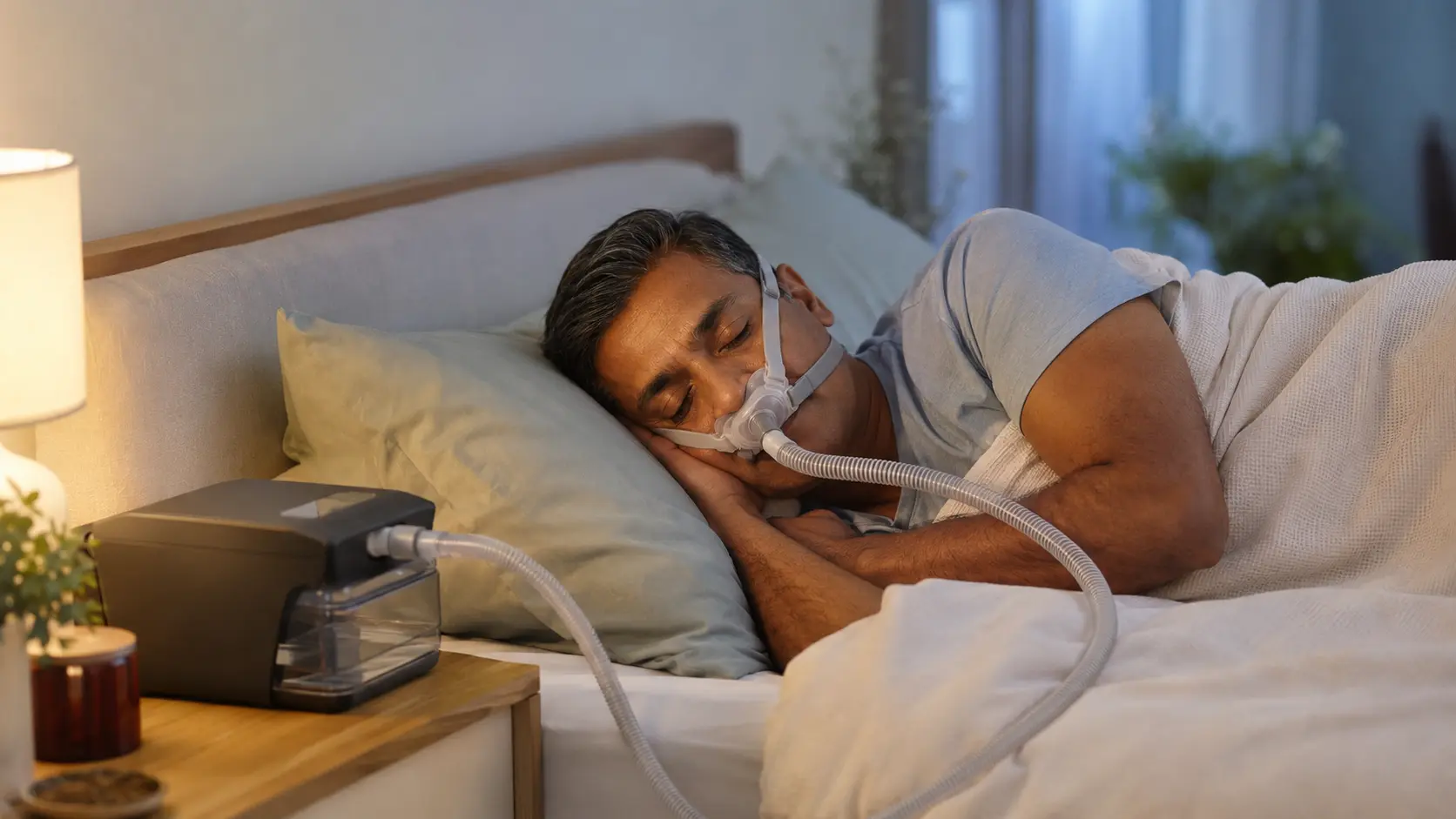
Receiving a diagnosis of obstructive sleep apnea can bring mixed feelings. It may be reassuring to finally understand the reason for years of snoring, morning headaches, poor concentration or daytime exhaustion. But when you are introduced to a CPAP machine and mask, that relief can quickly be replaced by a very genuine concern: “How am I supposed to sleep comfortably with this?”
That reaction is completely understandable. Continuous positive airway pressure, or CPAP, is an effective treatment for obstructive sleep apnea, but the mask and airflow feel unfamiliar at first. Some people adapt within a few nights, while others need several weeks and a few adjustments before treatment becomes comfortable.
The first month should not be viewed as a test that you either pass or fail. It is a period for learning, troubleshooting and finding the combination of mask, humidification and machine settings that works for you.
If you have only recently been investigated for sleep apnea, you may also find our guide to a full home sleep study in Lahore helpful.
What CPAP Actually Does
In obstructive sleep apnea, the upper airway repeatedly narrows or closes during sleep. CPAP provides a gentle stream of pressurised air through a mask, helping to keep the airway open. It does not breathe for you, and it is not an oxygen machine unless supplemental oxygen has been prescribed separately for another reason.
When treatment is effective, CPAP reduces obstructive breathing events, oxygen drops and repeated sleep disruption. Possible benefits include quieter sleep, fewer morning headaches, improved alertness and better daytime function. The extent and timing of improvement vary from person to person.
You can read more about the condition on our obstructive sleep apnea information page.
Before Your First Night
A good start involves more than switching the machine on. Before using CPAP, make sure you understand:
- How to put the mask on and remove it
- How tight the straps should be
- How to start and stop the machine
- How to fill and clean the humidifier chamber, if one is being used
- Which components require regular cleaning or replacement
- Who to contact if you develop leakage, dryness or pressure discomfort
Try the mask while you are awake for 15–30 minutes. You can wear it while reading or watching television, initially without the machine and then with the airflow running. This allows your brain to become familiar with the sensation before you are also trying to fall asleep.
Fit the mask while lying in your usual sleeping position with the machine running. A mask that seals while you are sitting may leak after you lie down or turn onto your side. The straps should be secure but not painfully tight; overtightening can distort the cushion, worsen leakage and cause pressure marks.
The First Week: Getting Used to Something New
During the first few nights, you may be more aware of the mask and airflow than of any immediate improvement in sleep. Common early experiences include:
- Feeling that the airflow is stronger than expected
- Finding it unfamiliar to breathe out against the pressure
- Waking because the mask has moved or started leaking
- Feeling confined, particularly with a full-face mask
- Removing the mask during sleep without remembering
- Developing nasal dryness, congestion or a dry mouth
These experiences do not automatically mean that CPAP is unsuitable or ineffective. They usually indicate that acclimatisation or a practical adjustment is needed.
Use the machine from the beginning of the night whenever possible. If you cannot initially tolerate it all night, focus on gradual progress while seeking help early. Repeatedly forcing yourself through a correctable problem can make CPAP feel more difficult than it needs to be.
Weeks Two to Four: Improving Comfort and Consistency
As the mask and airflow become more familiar, attention shifts to the details that determine comfort: mask style, seal, humidification, nasal breathing and sleeping position.
The eventual goal is to use CPAP whenever you sleep, including during daytime naps, because obstructive sleep apnea returns whenever the machine is not being used. “Four hours” is sometimes used as an administrative measure of adherence, but it should not be mistaken for the ideal treatment target. If you sleep for seven hours, using CPAP for only four leaves part of the night untreated.
Some people notice improved alertness, fewer morning headaches or less snoring within days or weeks. Others take longer. Persistent tiredness does not necessarily mean that CPAP has failed; it may reflect insufficient usage, mask leakage, residual breathing events, inadequate sleep duration, medication effects or another sleep or medical condition.
Common CPAP Problems—and What May Help
Mask leakage or discomfort
A small amount of intentional airflow from the mask vent is normal. Air escaping around the cushion, blowing into the eyes or creating loud noise is not.
Check the mask position while lying down with the machine running. Avoid automatically tightening every strap, because excessive tension can worsen the seal. A different size or mask style—nasal pillows, a nasal mask or a full-face mask—may be more suitable for your facial shape, sleeping position and pattern of breathing.
Persistent red marks, skin breakdown or pressure sores require review rather than simply tolerating them.
Dry nose, nasal congestion or dry mouth
Heated humidification can reduce nasal and mouth dryness for many users. Persistent dry mouth may also indicate air escaping through the mouth, particularly when using a nasal interface. This may require review of mask type, mask fit, humidification or nasal symptoms.
Do not routinely use medicated nasal sprays without appropriate advice. Saline spray or irrigation may help some patients, while persistent nasal obstruction or allergy may require clinical assessment.
Feeling claustrophobic
Practise wearing the mask for short periods while awake. Begin with the mask alone, then connect the airflow once the mask feels less threatening. Slow breathing and a gradual exposure approach are usually more helpful than waiting until bedtime and forcing prolonged use.
A less bulky interface may be considered if it can still provide effective treatment.
Difficulty breathing out or pressure that feels too strong
Some machines have a ramp function that begins at a lower pressure and gradually increases after you settle. Expiratory pressure-relief features may also improve comfort in selected patients.
These features should be used according to the device instructions and your treatment plan. Do not change the prescribed therapeutic pressure without appropriate clinical guidance. Persistent pressure intolerance may require review of the mask, machine data or treatment mode.
Removing the mask during sleep
Unconscious mask removal may improve as treatment becomes familiar. If it continues, look for a reason: leakage, nasal blockage, pressure discomfort, dryness or a poorly fitting mask. Reviewing the device data may show when the mask is being removed and whether significant leakage occurs beforehand.
Swallowed air, belching or abdominal bloating
Swallowing air during CPAP is known as aerophagia. Occasional mild symptoms may settle, but persistent discomfort should be discussed with your sleep physician. Mask fit, body position and pressure behaviour may need review.
Water collecting in the tubing or mask
Condensation inside the tubing is often called “rainout.” It may improve by adjusting the humidifier or heated tubing, keeping the machine below mattress level and avoiding an excessively cold bedroom. Follow the manufacturer’s instructions for your specific machine.
How Do You Know Whether CPAP Is Working?
How you feel is important, but symptoms are only part of the assessment. Modern CPAP and APAP machines may record information such as:
- Hours of use
- Mask leakage
- Residual apnea–hypopnea index (AHI)
- Delivered or required pressure
- Patterns of usage through the night
These numbers need context. A low machine-reported AHI is reassuring, but it does not automatically explain persistent tiredness, and different manufacturers calculate some measurements differently. Device information should be interpreted alongside your original sleep study, symptoms and relevant medical history.
What We Review at Your First CPAP Follow-Up
At a CPAP follow-up appointment, we assess more than the number of hours shown on the machine. Please bring your CPAP machine, mask and tubing to the consultation. Where applicable, also bring the machine’s SD card or access to its connected application data. The review may include:
- Whether the mask is comfortable and appropriate
- Mask leakage and pressure marks
- Residual breathing events recorded by the device
- Pressure requirements and pressure tolerance
- Humidification, dry mouth and nasal symptoms
- Changes in snoring, morning headaches and daytime alertness
- Whether CPAP is being used throughout sleep
- Any continuing concerns reported by the patient or sleeping partner
- Condition of the machine’s air filter and whether replacement is due
Small adjustments made early can significantly improve comfort and help patients establish a sustainable routine. Early follow-up is particularly valuable because usage patterns during the first weeks can influence longer-term adherence.
The Australian Sleep Diagnostic Laboratory provides sleep-apnea assessment, CPAP-related advice and longer-term follow-up in DHA Phase 5, Lahore.
When Should You Contact Your Sleep Physician?
Do not wait several months if CPAP remains difficult. Arrange a review if you experience:
- Persistent mask leakage or inability to keep the mask on
- Painful pressure marks, skin injury or eye irritation from leakage
- Continuing severe dryness or nasal obstruction
- Significant bloating or discomfort from swallowed air
- Persistent difficulty tolerating the pressure
- Continued loud snoring, choking or witnessed breathing pauses while using CPAP
- Ongoing excessive sleepiness despite regular use
- Machine warnings or uncertainty about whether treatment is working
Do not stop CPAP or change prescribed pressure settings without discussing the problem with an appropriately qualified clinician. If you remain dangerously sleepy, avoid driving and seek medical advice.
Book a CPAP Follow-Up Consultation
Having difficulty with mask leakage, pressure discomfort, dryness or persistent tiredness? A review of your symptoms, mask fit and CPAP data may identify a correctable problem.
Book an appointment at Australian Polyclinic
Phone: +92311057333
Location: First Floor, Building 19, CCA, DHA Phase 5, Lahore
Frequently Asked Questions
Is it normal not to tolerate CPAP all night during the first week?
Yes. Some patients initially manage only part of the night. Continue working towards using CPAP whenever you sleep, and seek early help for mask leakage, dryness, nasal blockage or pressure discomfort rather than accepting limited use as the long-term goal.
How can I tell whether my CPAP mask fits properly?
The mask should feel secure without being painfully tight. Warning signs of poor fit include air blowing into the eyes, loud leakage, frequent seal loss, persistent red marks, pressure sores or needing to overtighten the straps. Fit should be checked while lying in your usual sleeping position with the machine running.
Can I change to a different type of CPAP mask?
Yes. Nasal pillows, nasal masks and full-face masks suit different facial shapes, sleeping positions and breathing patterns. Changing the mask does not mean that CPAP treatment has failed, but the replacement should be appropriately sized and assessed for leakage and comfort.
Should I change the pressure if it feels too strong?
Do not change the prescribed therapeutic pressure without clinical guidance. Ramp or expiratory pressure-relief features may improve comfort, but persistent pressure intolerance should prompt review of the mask, treatment data and prescribed settings.
Will I need CPAP forever?
Obstructive sleep apnea commonly requires long-term treatment, but individual needs can change after substantial weight loss, surgery or other changes in health and anatomy. Continue CPAP unless your sleep physician advises otherwise. Reassessment or a repeat sleep study may be required before treatment is reduced or discontinued.
Why am I still tired despite using CPAP?
Possible explanations include insufficient nightly use, mask leakage, residual breathing events, inadequate sleep duration, medication effects or another sleep or medical condition. A review of the machine data, symptoms and sleep routine is usually the appropriate next step.
Medical Disclaimer
The information provided in this article is for general educational purposes only and is not intended to replace individual medical advice, diagnosis or treatment. Symptoms and treatment needs vary between individuals. Do not start, stop or change CPAP pressure settings, medication or any other treatment without consulting a qualified healthcare professional. Seek urgent medical attention for severe breathlessness, chest pain, fainting, sudden confusion or other concerning symptoms.
Written by Australian Polyclinic Medical Team
Medically reviewed by Dr G. Sarwar Chaudhry
MBBS, FRACP (Australia), FCCP (USA)
Consultant Pulmonologist and Sleep Physician
Last reviewed: 26 Aug 2026
References
- Patil SP, et al. Treatment of Adult Obstructive Sleep Apnea with Positive Airway Pressure: An American Academy of Sleep Medicine Clinical Practice Guideline. Journal of Clinical Sleep Medicine. 2019. PubMed
- Van Ryswyk E, et al. Predictors of long-term adherence to continuous positive airway pressure in patients with obstructive sleep apnea and cardiovascular disease. Sleep. 2019. PubMed
- Mayo Clinic. CPAP machines: Tips for avoiding common problems. Mayo Clinic