

Article approved by Dr G Sarwar Chaudhry, MBBS, FRACP (Australia), FCCP (USA) — Consultant Pulmonologist, Sleep Physician and Allergy Specialist.
Allergies can cause persistent sneezing, blocked or runny nose, itchy or watery eyes, cough, wheezing, asthma symptoms and, in some people, reactions associated with certain foods.
Finding out what you are actually allergic to can help guide allergen avoidance, medication and, in selected patients, allergen immunotherapy.
At Australian Polyclinic, DHA Phase 5, Lahore, we perform skin prick allergy testing for environmental and selected food allergens, with results usually assessed approximately 15 minutes after testing.
Allergy testing and treatment at the clinic is overseen by Dr G Sarwar Chaudhry, an Australian-trained consultant pulmonologist, sleep physician and allergy specialist.
What Is a Skin Prick Allergy Test?
A skin prick test is one of the most commonly used methods for assessing immediate allergic sensitisation.
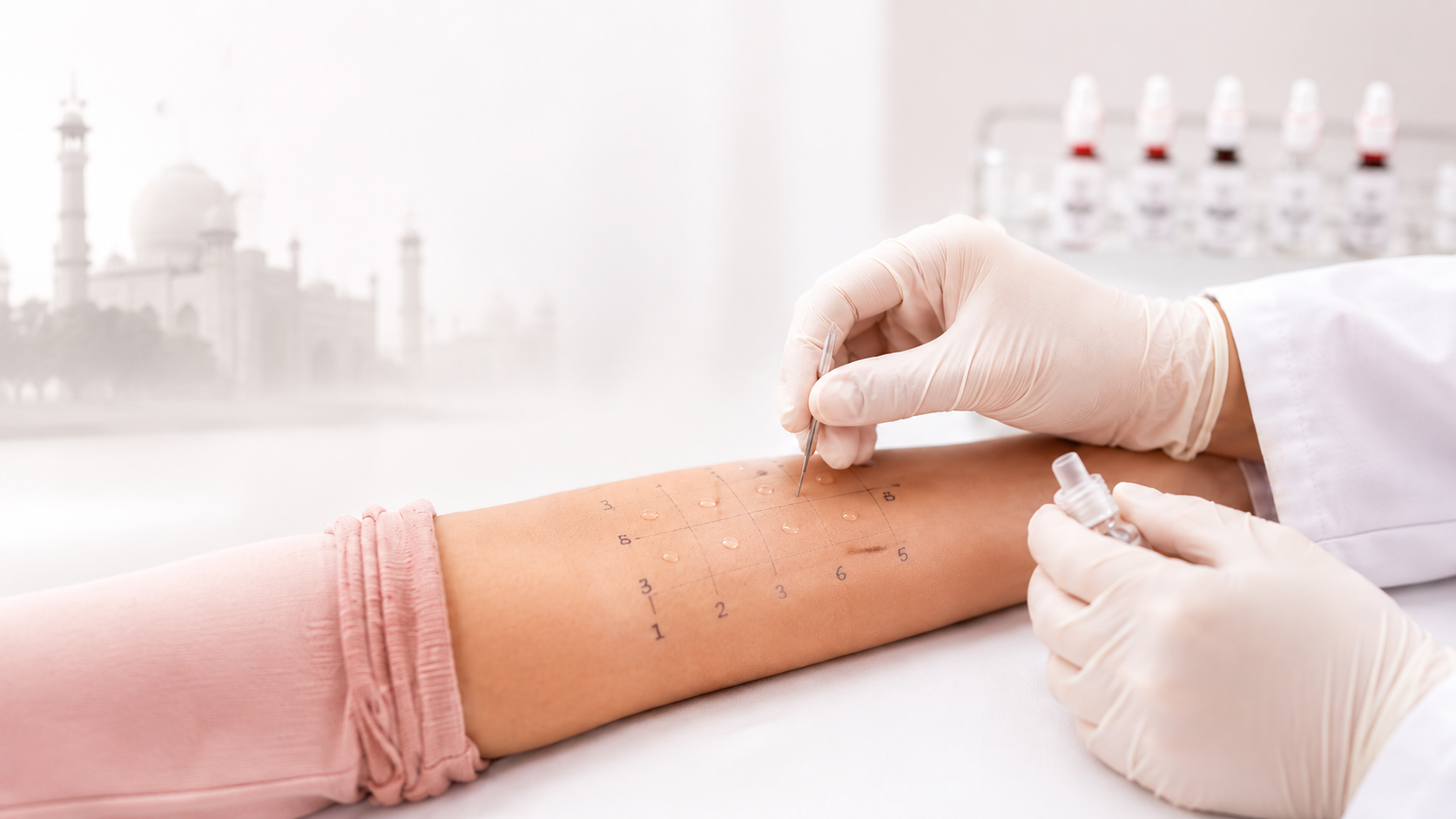
Very small amounts of selected allergen extracts are placed on the skin, usually on the forearm. The skin is then gently pricked through each drop, allowing the allergen to interact with the superficial layers of the skin.
If a person is sensitised to a particular allergen, a small raised, itchy swelling known as a wheal may develop at the test site.
The reaction is measured and interpreted against appropriate positive and negative controls.
At our Allergy Centre in Lahore, skin prick test results are usually read after approximately 15 minutes, allowing the findings to be discussed during the same visit.
What Allergies Can Be Tested?
Our skin prick testing panels include a range of allergens relevant to respiratory, nasal and food allergy symptoms.
Depending on the patient’s symptoms and the testing panel selected, allergens may include:
- House dust mites
- Grass pollens
- Weed pollens
- Other environmental pollens
- Animal dander
- Moulds and fungi
- Selected food allergens
We use different allergy-testing panels so that testing can be tailored to the patient’s symptoms and clinical history.
The aim is not simply to test as many allergens as possible. The most useful test is one that investigates allergens that are reasonably likely to explain the patient’s symptoms.
Who May Benefit From Allergy Testing?
Skin prick testing may be useful in patients with symptoms or conditions such as:
Allergic Rhinitis
Common symptoms include:
- Repeated sneezing
- Runny nose
- Blocked nose
- Nasal itching
- Itchy or watery eyes
- Seasonal worsening
- Symptoms triggered by dust
- Symptoms following outdoor exposure
- Symptoms around animals
Allergic rhinitis may be caused by allergens such as house dust mites, grass pollen, weed pollen, moulds or animal dander.
Identifying the relevant allergen may allow more focused environmental measures and treatment.
Asthma
Environmental allergies are particularly important in people with asthma.
House dust mites, pollens, moulds and animal allergens can contribute to airway inflammation and trigger symptoms in susceptible individuals.
Patients can read more about asthma symptoms, diagnosis and management on our website.
Where allergy is contributing to asthma, identifying the responsible allergen can help guide both allergen avoidance and the overall asthma-management strategy.
Persistent Cough or Wheezing
Allergic airway disease may also present with persistent or recurrent:
- Cough
- Wheezing
- Chest tightness
- Nasal congestion
- Postnasal symptoms
In patients where an allergic cause is suspected, skin prick testing can help identify relevant environmental sensitisation.
Suspected Food Allergy
Selected food allergens can also be assessed by skin prick testing when the patient’s clinical history suggests an immediate allergic reaction.
However, an important principle is that:
A positive food allergy test does not automatically mean that a patient has a clinically significant food allergy.
The result must be interpreted together with the patient’s actual reaction after eating that food.
Unnecessary avoidance of foods solely because of a positive test should therefore be avoided.
How Long Does Skin Prick Allergy Testing Take?
Skin prick testing itself is relatively quick.
After the selected allergens are applied to the skin, the patient waits approximately 15 minutes.
The reactions are then examined and measured.
This means the results can usually be reviewed and discussed during the same clinic visit rather than waiting several days for a laboratory report.
Is Skin Prick Testing Painful?
Skin prick testing does not involve drawing blood.
The surface of the skin is gently pricked with a very small testing device. Most patients experience only minor discomfort.
Where a test is positive, the area may become temporarily itchy and raised, similar to a small mosquito bite.
These reactions generally settle relatively quickly.
Do Antihistamines Affect Skin Prick Testing?
Yes.
Many antihistamines suppress the allergic reaction in the skin and can therefore interfere with the accuracy of skin prick testing.
Patients should inform the clinic about any antihistamines or allergy medicines they are taking when arranging their appointment.
The clinic can then advise whether a particular medication needs to be withheld before testing and for how long.
Patients should not stop prescribed medication without appropriate medical advice.
Skin Prick Testing vs Blood Allergy Tests
Allergic sensitisation can also be investigated using blood tests that measure allergen-specific IgE.
These are sometimes referred to by patients as RAST tests, although modern laboratory techniques generally use newer specific-IgE assays.
Skin prick testing and allergen-specific IgE blood tests approach the same clinical question in different ways, and neither method is automatically superior for every patient.
At Australian Polyclinic, we perform skin prick allergy testing. We do not currently perform RAST or allergen-specific IgE blood testing within the clinic.
When blood allergy testing is clinically indicated, it can be performed through an external laboratory.
For many patients with suspected environmental respiratory allergies, skin prick testing provides the advantage of testing several relevant allergens and obtaining results within approximately 15 minutes.
What Does a Positive Allergy Test Mean?
A positive skin prick test demonstrates sensitisation to an allergen.
However, sensitisation and clinical allergy are not always the same thing.
For example, a patient may have a positive reaction to an allergen without experiencing significant symptoms when exposed to it.
This is why allergy testing should always be interpreted in conjunction with:
- The patient’s symptoms
- Timing of symptoms
- Seasonal variation
- Home and workplace exposures
- Relationship between exposure and symptoms
- Asthma or nasal allergy history
- Reactions to particular foods, where relevant
The aim is to identify the allergens that are clinically relevant, rather than simply producing a long list of positive tests.
What Happens After a Positive Allergy Test?
Once relevant allergens have been identified, treatment can be personalised.
Depending on the condition, this may include:
- Reducing exposure to the relevant allergen
- House dust mite avoidance measures
- Pollen avoidance strategies
- Treatment for allergic rhinitis
- Nasal sprays
- Antihistamines where appropriate
- Asthma assessment and treatment
- Advice regarding suspected food allergy
- Consideration of allergen immunotherapy
Patients with nasal, sinus or respiratory allergies can also learn more about the services provided through our Allergy Centre Lahore.
Allergen Immunotherapy
Some patients continue to experience significant allergy symptoms despite appropriate allergen avoidance and medication.
For selected patients, allergen immunotherapy may be considered.
Immunotherapy is designed to gradually modify the immune system’s response to a particular allergen rather than simply treating symptoms whenever they occur.
At Australian Polyclinic, allergen immunotherapy is available for appropriately selected patients with confirmed clinically relevant allergy to:
- House dust mites
- Grass pollens
- Weed pollens
Testing is therefore particularly useful when immunotherapy is being considered, because treatment should be directed towards allergens that are both demonstrably positive and clinically relevant to the patient’s symptoms.
Immunotherapy for Other Allergens
In selected circumstances, specialised immunotherapy preparations for other allergens may also be requested from the manufacturer.
These preparations may need to be specially produced or imported and therefore can require additional time to arrange.
Whether immunotherapy is appropriate depends on several factors, including:
- The patient’s symptoms
- Allergy test results
- Clinical relevance of the allergen
- Severity and duration of symptoms
- Response to conventional treatment
- Other underlying medical conditions
The decision should therefore be individualised rather than based solely on a positive allergy test.
Why Identifying the Correct Allergen Matters
People are exposed to many potential allergens every day.
For example, a person with year-round nasal symptoms may assume that pollen is responsible when the major trigger is actually house dust mite.
Another patient may remain relatively well for much of the year but develop significant symptoms during periods of increased grass or weed pollen exposure.
Correctly identifying the responsible allergen allows treatment to be targeted towards the most likely cause rather than relying exclusively on non-specific allergy medication.
Allergy Testing Under the Supervision of Dr G Sarwar Chaudhry
Allergy testing at Australian Polyclinic is performed as part of a broader clinical allergy and respiratory assessment under the supervision of Dr G Sarwar Chaudhry.
Dr Sarwar is an Australian-trained consultant pulmonologist, sleep physician and allergy specialist and holds Fellowship of the Royal Australasian College of Physicians (FRACP).
This combined respiratory and allergy experience is particularly relevant for patients whose allergies overlap with:
- Asthma
- Chronic cough
- Recurrent wheezing
- Allergic rhinitis
- Nasal and sinus symptoms
- Environmental allergy
- Sleep-related breathing problems
Rather than interpreting the allergy test in isolation, the findings can be considered alongside the patient’s respiratory and allergy history.
Allergy Services at Australian Polyclinic, Lahore
Our allergy services include:
- Specialist allergy consultation
- Skin prick allergy testing
- Environmental allergen testing
- Selected food allergen testing
- House dust mite testing
- Grass and weed pollen testing
- Assessment of allergic rhinitis
- Allergy assessment in patients with asthma
- Allergen avoidance advice
- Allergen immunotherapy for selected patients
- Special-order immunotherapy for selected additional allergens
You can also visit our dedicated Allergy Centre Lahore page for more information about allergy services.
Book an Allergy Assessment in Lahore
If you experience persistent sneezing, nasal blockage, itchy or watery eyes, recurrent wheezing, asthma symptoms or other symptoms suggesting environmental or food allergy, identifying the responsible allergen may be an important step towards more targeted treatment.
Appointments for consultation and skin prick allergy testing are available at:
Australian Polyclinic
First Floor, Building 19, CCA, DHA Phase 5, Lahore
Phone / WhatsApp: 0311 0573333
Consultations and allergy testing are available under the supervision of Dr G Sarwar Chaudhry, MBBS, FRACP (Australia), FCCP (USA), Consultant Pulmonologist, Sleep Physician and Allergy Specialist.
Frequently Asked Questions
How long does a skin prick allergy test take?
The allergens are applied to the skin and reactions are generally read after approximately 15 minutes.
Can skin prick testing detect pollen allergy?
Yes. Skin prick testing can assess sensitisation to environmental allergens including selected grass pollens, weed pollens and other relevant pollens.
Can you test for house dust mite allergy?
Yes. House dust mite is an important cause of persistent allergic rhinitis and asthma, and dust mite allergy can be assessed using skin prick testing.
Do you test for food allergies?
Selected food allergens can be tested where clinically appropriate. However, a positive test should always be interpreted together with the patient’s history because sensitisation does not necessarily mean clinically significant food allergy.
Do you perform RAST or IgE blood allergy tests?
Australian Polyclinic currently performs skin prick allergy testing rather than RAST or allergen-specific IgE blood testing within the clinic. Blood testing can be arranged through an external laboratory when clinically indicated.
Do antihistamines interfere with allergy testing?
Yes. Many antihistamines suppress the skin response and may interfere with skin prick testing. Patients should contact the clinic before their appointment for appropriate advice regarding their medication.
Is allergy immunotherapy available?
Yes. Allergen immunotherapy is available for suitable patients with clinically relevant allergy to house dust mites, grass pollens and weed pollens.
Can immunotherapy be arranged for other allergens?
In selected cases, specialised allergen immunotherapy preparations may be requested from the manufacturer. These may require additional time to obtain.
Can allergy testing help people with asthma?
Yes. Environmental allergens such as house dust mites and pollens can trigger or worsen asthma in susceptible individuals. Identifying relevant sensitisation may help guide allergen avoidance and overall asthma management.
Who supervises allergy testing at Australian Polyclinic?
Allergy testing and management at Australian Polyclinic is overseen by Dr G Sarwar Chaudhry, an Australian-trained consultant pulmonologist, sleep physician and allergy specialist.