
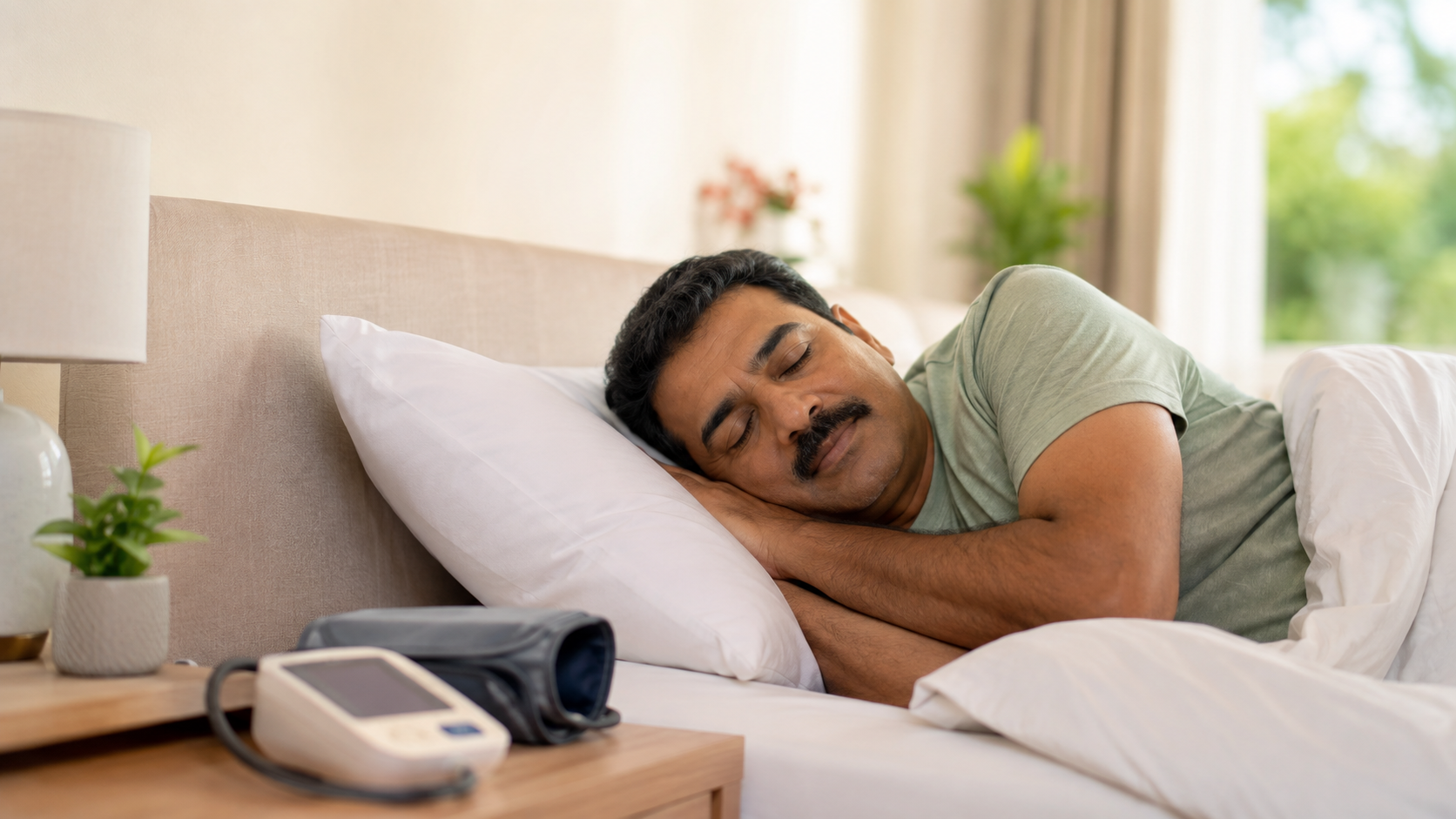
If you’ve been on blood pressure medication for months and your readings still won’t budge, the answer might not be in your medicine — it might be in your bedroom.
Obstructive sleep apnea (OSA) and high blood pressure (hypertension) are two of the most common conditions we see at Australian Polyclinic, and they’re far more connected than most patients realize. In fact, sleep apnea is one of the most frequently missed causes of “resistant hypertension” — high blood pressure that doesn’t respond well to standard treatment.
How Sleep Apnea Raises Blood Pressure
When you have sleep apnea, your airway repeatedly narrows or collapses during sleep, cutting off airflow for many seconds at a time. Each time this happens, your body reacts as if it’s under threat — oxygen levels drop, and your nervous system triggers a stress response to wake you just enough to reopen the airway.
This happens dozens or even hundreds of times a night. Every one of those events causes a spike in blood pressure and heart rate. Over months and years, this repeated nightly strain can push blood pressure up permanently — even during the day, when you’re not having any breathing episodes at all.
This is why some patients with genuinely difficult-to-control hypertension turn out to have undiagnosed sleep apnea sitting underneath it the whole time.
Signs the Two Might Be Connected
You may want to raise sleep apnea with your doctor if you have high blood pressure alongside any of the following which suggests sleep apnoea:
- Loud, habitual snoring
- Waking up gasping or choking
- Morning headaches
- Excessive daytime sleepiness despite a full night in bed
- A partner who has noticed pauses in your breathing during sleep
- Blood pressure that stays high despite taking your medication as prescribed
Why Treating One Can Help the Other
The encouraging part of this connection is that it works both ways. Patients who are diagnosed with sleep apnea and start effective treatment — most commonly CPAP therapy — often see measurable improvements in their blood pressure over time, sometimes significant enough that their doctor can reduce their medication dose or stop it altogether.
This is one of the reasons a proper sleep study matters. It’s not just about feeling more rested — for many patients, it’s a missing piece in managing a chronic condition they’ve been struggling with for years.
What a Sleep Study Involves
If sleep apnea is suspected, the most reliable way to confirm it is a monitored sleep study. At Australian Polyclinic’s Sleep Diagnostic Laboratory, this can often be done as a home-based study, so you sleep in your own bed while breathing patterns, oxygen levels, and other markers are recorded overnight.
If the results confirm sleep apnea, treatment is planned based on severity — which may include CPAP therapy, lifestyle changes, or other interventions depending on your individual case.
When to Talk to Your Doctor
If you have high blood pressure that isn’t responding well to treatment, or if you or your partner have noticed signs of disrupted breathing at night, it’s worth raising both issues together at your next appointment — not as two separate problems, but as one conversation. Your doctor can help determine whether a sleep study is the right next step. Dr Sarwar Chaudhry provides consultation regarding sleep issues whilst Dr Sadaf Sarwar has special interest in resistant high blood pressure management.
If you have loud snoring, witnessed breathing pauses or blood pressure that remains high despite treatment, an assessment for sleep apnea may be appropriate.
The information provided in this article is for general educational purposes only and is not intended to replace individual medical advice, diagnosis or treatment. Symptoms and treatment needs vary between individuals. Do not start, stop or change blood-pressure medication, CPAP therapy or any other treatment without consulting a qualified healthcare professional. Seek urgent medical attention if you experience chest pain, severe breathlessness, fainting, sudden weakness or confusion, or severely elevated blood pressure accompanied by concerning symptoms.
Medically reviewed by Dr G. Sarwar Chaudhry
MBBS, FRACP, FCCP
Consultant Pulmonologist and Sleep Physician
(Last reviewed 25 August 2026)
Frequently Asked Questions
Can sleep apnea really cause high blood pressure, or does it just make existing hypertension worse? Both. Sleep apnea can contribute to the development of high blood pressure in people who didn’t previously have it, and it can also make existing hypertension significantly harder to control, particularly in cases of resistant hypertension.
If I treat my sleep apnea, will my blood pressure go back to normal? Many patients see a meaningful improvement in blood pressure after starting treatment, especially with consistent CPAP use, though results vary by individual. It’s best viewed as one important part of managing blood pressure, not a guaranteed standalone cure.
Do I need a sleep study if I only have mild snoring? Snoring alone doesn’t necessarily mean sleep apnea, but if it’s loud, habitual, or accompanied by gasping, choking, or daytime tiredness, it’s worth being assessed rather than assumed to be harmless.
Is a home sleep study as accurate as an in-hospital one? For most patients being assessed for obstructive sleep apnea, a home sleep study provides reliable, clinically useful results while letting you sleep in your own environment. Your doctor can advise if your specific situation calls for a different type of study.
How soon after starting CPAP therapy might my blood pressure improve? This varies between patients — some notice changes within weeks of consistent use, while for others it takes longer and works alongside their existing medication rather than replacing it. Regular follow-up with your doctor is the best way to track progress.