
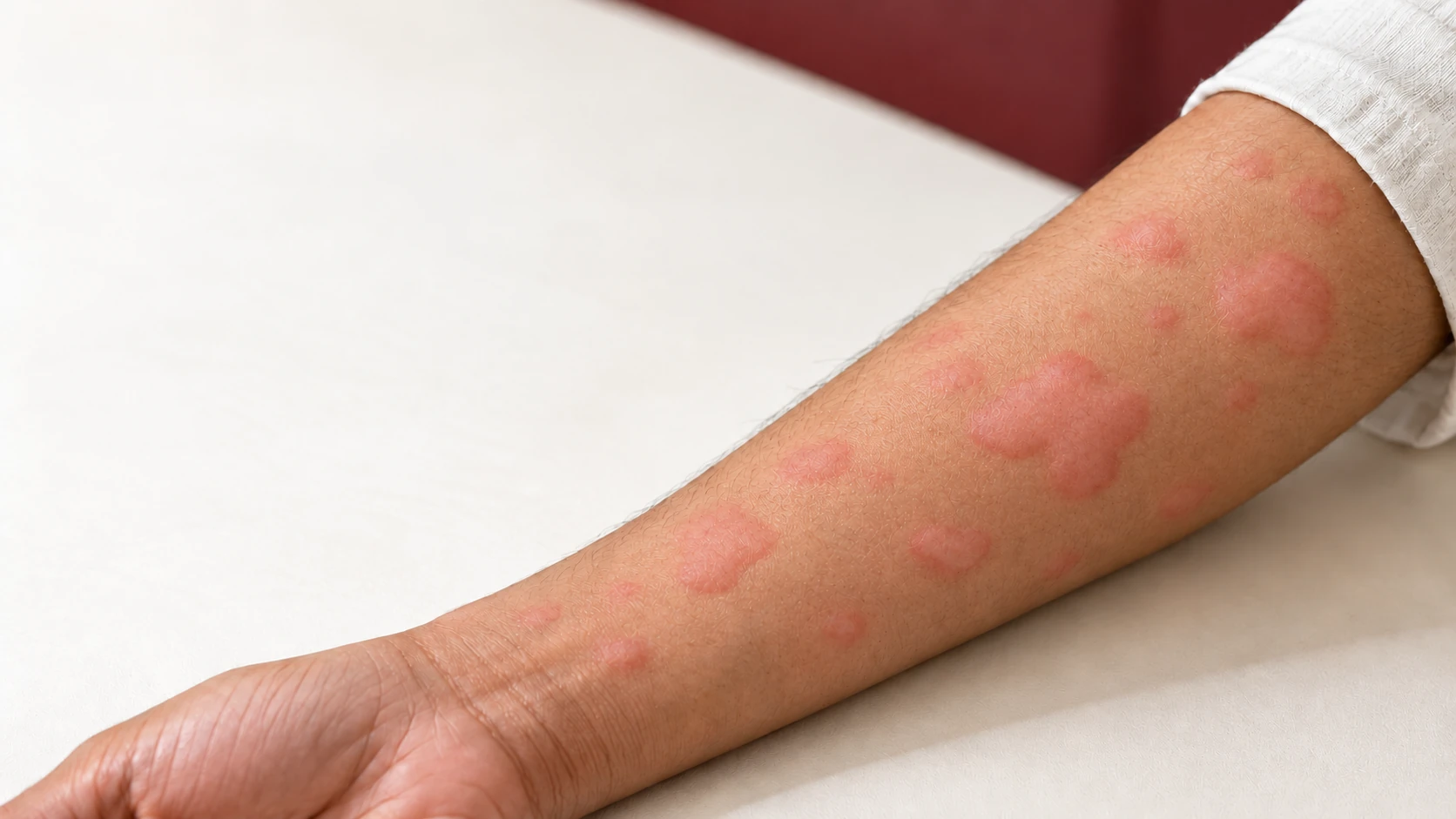
The rash settles after treatment, then returns a few days later. It is natural to wonder whether the medicine failed, whether a new allergy has appeared, or whether every meal needs to be changed.
In many people, recurring hives reflect an urticaria process that is still active. The practical question is not simply “What did I eat?” but “What type of hives do I have, and is my current plan controlling them?” For the basics, start with our complete urticaria guide.
When are recurring hives called chronic urticaria?
When episodes continue beyond six weeks, the term chronic urticaria is used. In chronic spontaneous urticaria, symptoms develop without a consistent outside trigger. Some people also have physical triggers, such as pressure, temperature changes or friction.[1][2]
Do not confuse the duration of the condition with the duration of one patch. A single ordinary wheal usually fades within a day, while new ones may keep appearing. A fixed, painful or bruising lesion deserves another look.
Why can the rash return after antihistamines stop?
Antihistamines suppress the itch and swelling associated with hives. They do not necessarily switch off the underlying condition permanently. If urticaria is still active, symptoms may return when treatment is stopped.[2]
This does not automatically mean you are dependent on the medicine. It may mean the treatment duration, schedule or overall plan needs review. Discuss how and when to reduce treatment rather than repeatedly stopping and restarting it without a plan.
What should a structured treatment review cover?
- Confirm the pattern: bring photographs and describe how long individual patches last.
- Review all medicines: include prescribed treatment, painkillers, supplements and products bought without a prescription.
- Check the schedule: explain what you take, when you take it and whether doses are missed.
- Measure the burden: mention disturbed sleep, trouble concentrating, swelling, missed work or avoidance of normal activities.
- Agree on follow-up: know when to return and which changes should prompt an earlier assessment.
These details help the clinician judge both control and whether another diagnosis needs consideration.[3]
What happens if standard treatment is not controlling the hives?
Guidelines recommend second-generation antihistamines as the first treatment. If control remains poor, a clinician can consider supervised dose adjustment and, if needed, specialist add-on treatment. Omalizumab is an established option for suitable patients whose symptoms remain uncontrolled.[4]
Do not increase doses, mix several antihistamines or repeat steroid courses yourself. Long-term systemic steroid treatment is generally discouraged in chronic urticaria. Referral is appropriate when symptoms remain difficult to control or the diagnosis is uncertain.[4]
Newer treatment options exist, but suitability, availability and monitoring need an individual discussion. A website list of medicines is not a personal prescription.
A short diary can make follow-up more useful
Choose a simple record you can maintain. Each day, note the date, roughly how widespread the rash was, how much it itched, any swelling, medicines taken and whether sleep was affected. Add a photograph during a representative flare.
You do not need to document every minute or buy a large testing panel first. A consistent record is more useful than a long list of guesses. Your clinician may also use a validated symptom or control questionnaire to help track progress.
When should recurrence prompt urgent assessment?
Sudden lip, mouth, tongue or throat swelling, breathing or swallowing difficulty, throat tightness, faintness or collapse needs emergency help. Follow a prescribed adrenaline action plan if you have one. Do not wait for a routine appointment message.[5]
Arrange prompt review for a rash with fever, joint pain, persistent painful lesions or bruising, rather than assuming every new symptom is another ordinary flare.
Follow-up with Dr Sadaf Sarwar
Dr Sadaf Sarwar provides assessment and management of urticaria and skin allergy concerns at Australian Polyclinic. Bring your symptom record and previous treatment details to discuss the next step.
Visit the urticaria and skin allergy service page for booking information, or explore her broader family medicine care if several health concerns need to be considered together.